
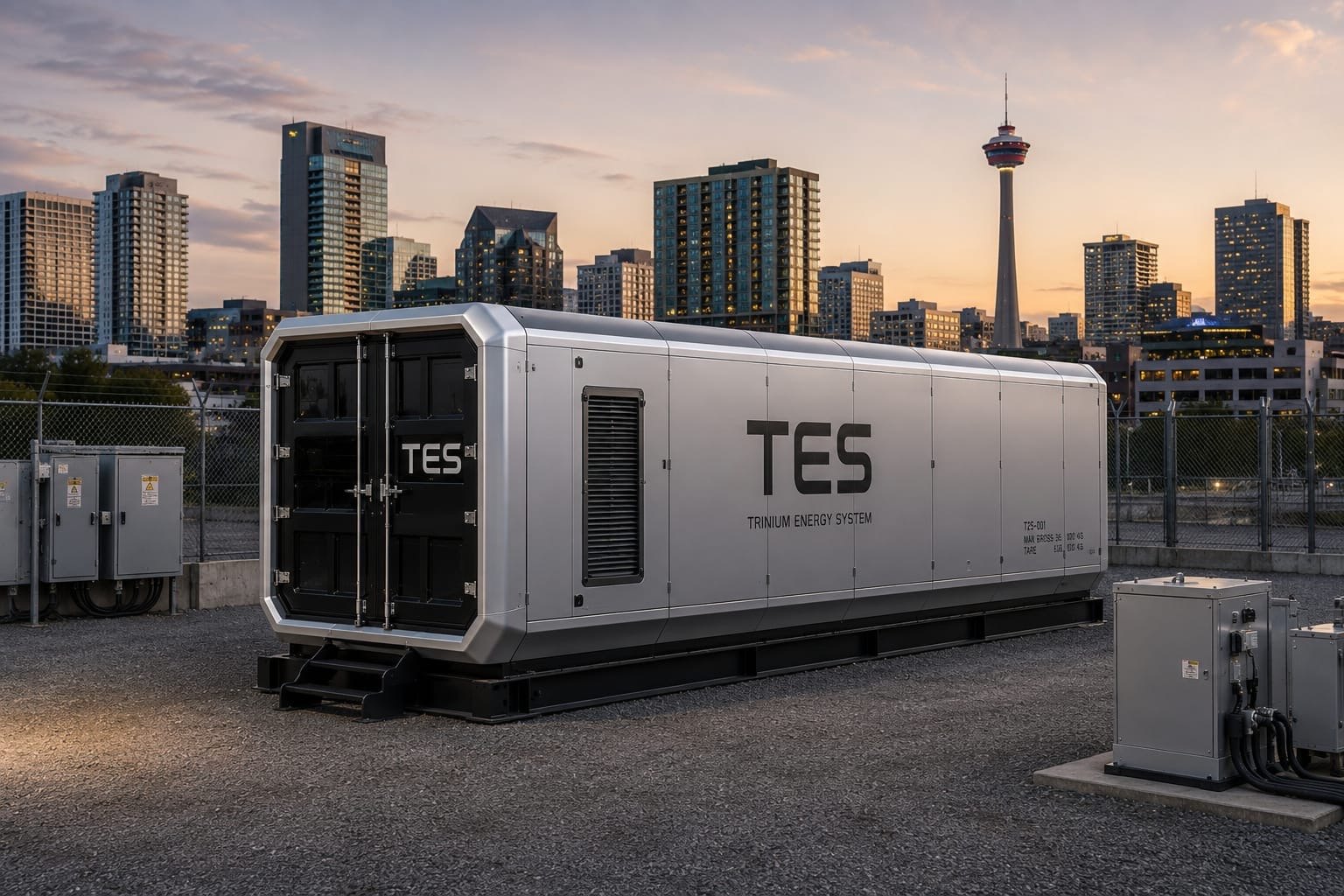
Reliable power. Recoverable water. Carbon utilization.
TES is a modular, fuel buffered electrochemical platform designed to deliver dependable, dispatchable electricity and recoverable water while creating a productive utilization pathway for carbon dioxide.
Generator like power with internal fuel regeneration
Traditional generators depend on an ongoing external fuel supply. TES begins with a managed internal fuel inventory and includes a controlled regeneration loop that helps restore usable fuel within the system.
This fuel buffered design allows electricity production and fuel regeneration to be managed in separate operating cycles, supporting dependable, load responsive power without direct dependence on weather or daylight.
TES starts with fuel like a generator, but includes an internal regeneration loop that helps restore usable fuel rather than relying only on ongoing external fuel deliveries.

A managed regenerative cycle
Managed fuel inventory
TES begins with a prepared internal fuel inventory.
Power & water generation
Managed fuel is converted into electrical power and recoverable water.
Carbon bearing return
Carbon bearing material stays within the managed system cycle.
Controlled regeneration
TES restores usable fuel through a controlled carbon utilization process.
Restored fuel inventory
Regenerated fuel returns to inventory for future power production.
The operating concept is presented at a system level. Detailed engineering information is reserved for protected technical discussions.
Built for global adaptability
TES uses one core system architecture across three deployment models. Each model is configured around a different primary operating need while retaining the same underlying platform.
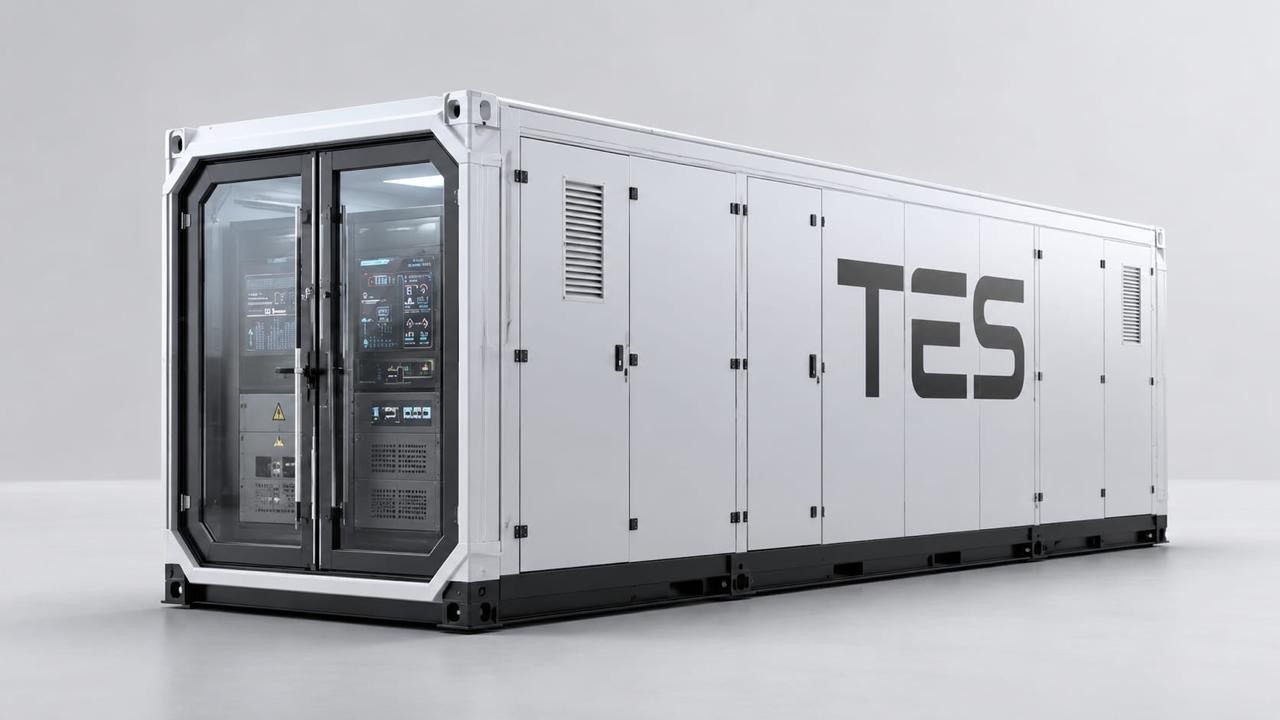
Standard TES Model
Preloaded. Containerized. Drop and go.
Begins with a preloaded TES fuel inventory and is designed to provide reliable power and recoverable water without requiring a constant on site CO₂ source.
Example Use Cases:
- Behind the meter power
- Remote and off grid infrastructure
- Data centers and critical facilities
- Hospitals and emergency infrastructure
- Marine and port operations
- Humanitarian and defense deployments
- FEMA/disaster relief
Modular units deployable together for expanded power and water output.
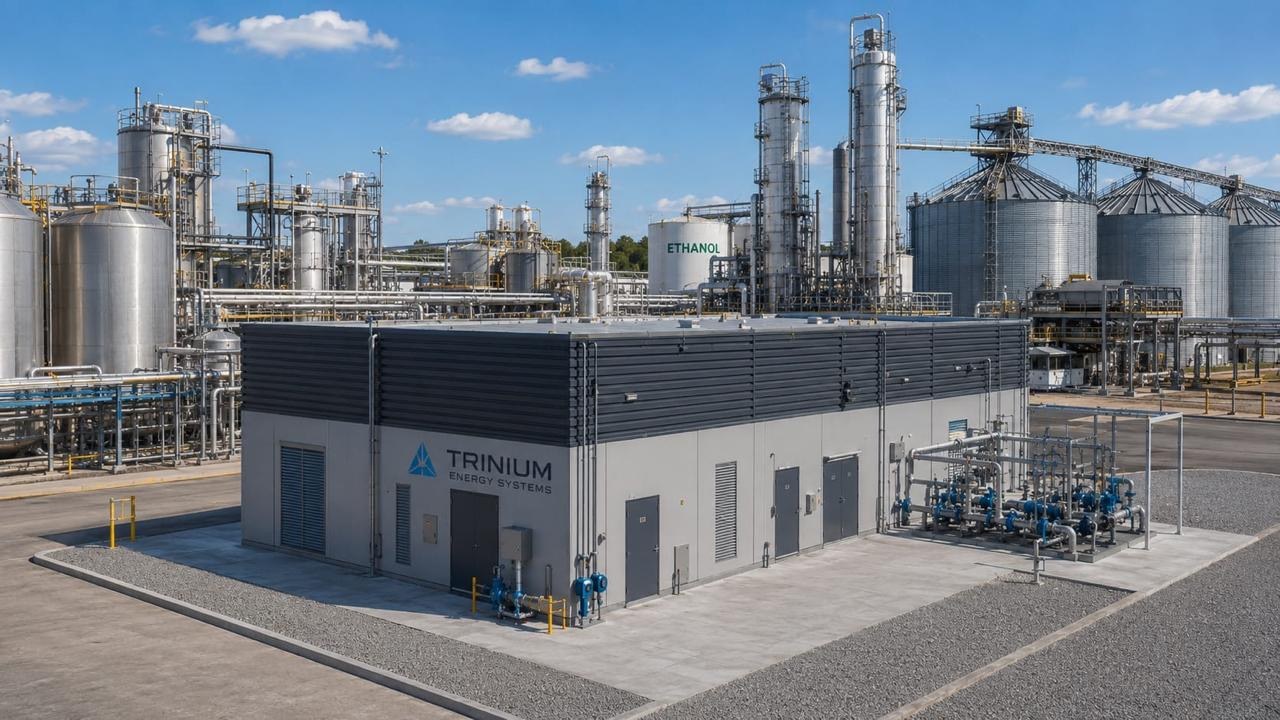
TES Industrial Facility Model
Industrial power, water, and carbon utilization.
Designed to connect with industrial or already captured CO₂ streams for on site carbon utilization, fuel regeneration, power production, and recoverable water. The TES Industrial Facility can also serve industrial sites that simply need greater on site power and water output, with or without an available CO₂ source, since the system operates on preloaded TES fuel.
Example Use Cases:
- Ethanol and renewable fuel facilities
- Ammonia and hydrogen production
- Industrial processing facilities
- Facilities with conditioned CO₂ streams
- Industrial sites needing higher on site power and water output
- Data centers
- Economically undeveloped regions
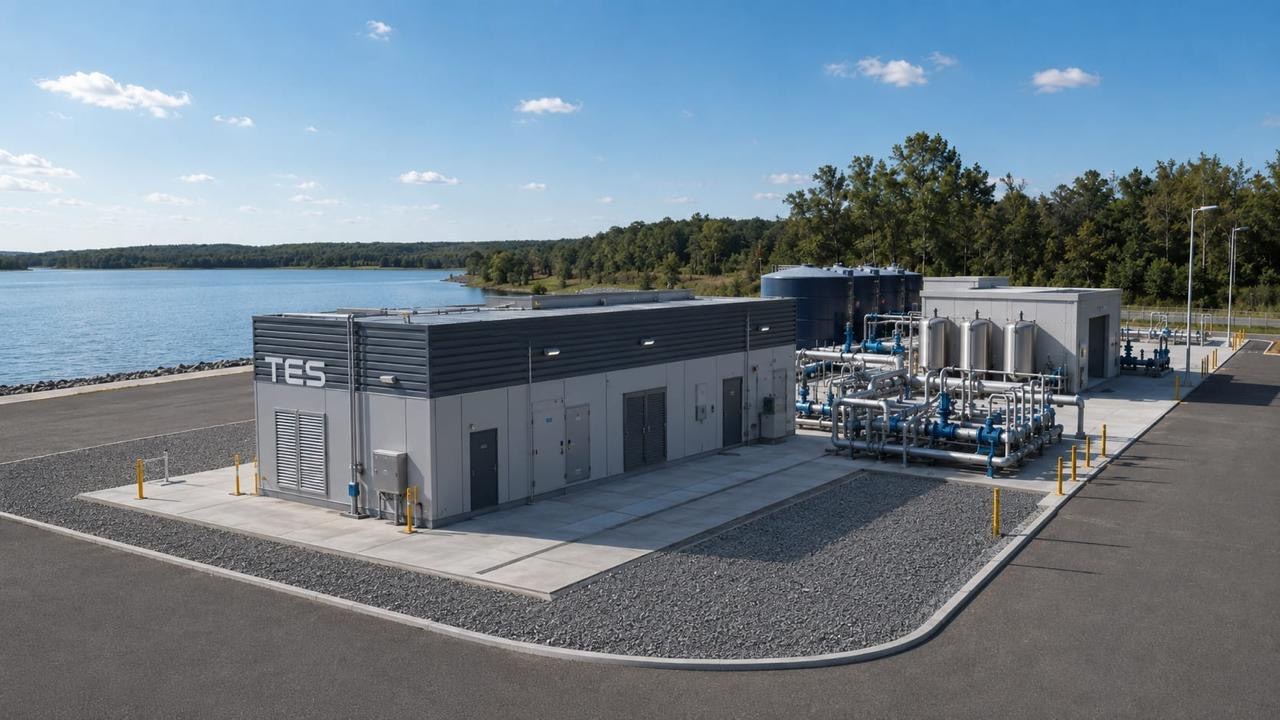
Industrial Water Plant Model
Water priority TES deployment.
A water priority configuration that routes the unit's full energy output back into system operations, maximizing throughput and recoverable water production for deployments where water is the primary objective.
Example Use Cases:
- Agriculture and irrigation support
- Industrial process and make up water
- Community water resilience
- Reservoir and storage replenishment
- Humanitarian response
- Remote and defense water support
Representative development targets
Representative industrial design targets, pending MVP and industrial prototype validation. Final performance will depend on configuration, operating conditions, system integration, and validation results. Figures shown on the gauges are representative targets for the Standard TES model. The Industrial Facility starts at 1 MW and 2,300+ gallons per day. The Industrial Water Plant targets 6,000 gallons per day.
Established science. Novel architecture. Disciplined validation.
TES draws on well understood thermodynamics, electrochemistry, fuel cell engineering, power management, controls, and systems integration. The innovation is the way these established disciplines are integrated into a novel, fuel buffered carbon utilization platform.
The system does not rely on speculative physics or exotic hardware. It is designed around established electrochemical principles, industrially relevant materials, and a staged validation pathway.

Explore a TES deployment for your operation
CIVIS Tech Global welcomes conversations with industrial operators, pilot hosts, infrastructure developers, and strategic partners.